01
Estradiol
The main form of estrogen in people assigned female at birth, produced by the ovaries. Responsible for ovulation, bone development, secondary sex characteristics, and optimal brain and reproductive system function.

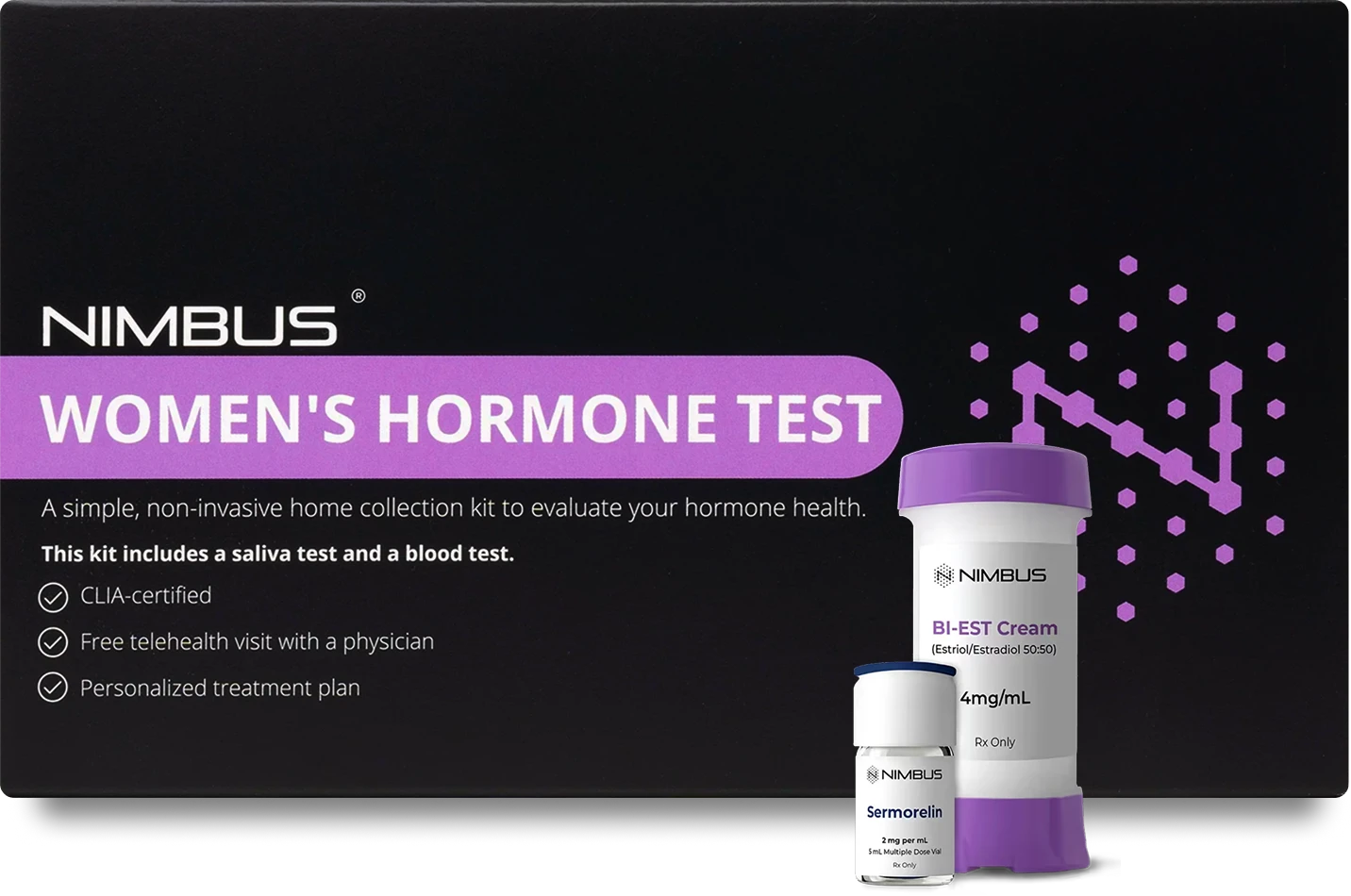
At-home test kit
A simple at-home sample collection kit to evaluate your overall hormone health. We test the levels of your estradiol, progesterone, cortisol, thyroid, and total testosterone.
Buy NowWhat we test
Your test results will provide information on these 6 key biomarkers. This can help you understand whether your hormones are within normal ranges.
The main form of estrogen in people assigned female at birth, produced by the ovaries. Responsible for ovulation, bone development, secondary sex characteristics, and optimal brain and reproductive system function.
Your body's stress hormone, produced in the adrenal glands and released in response to stressors like illness and exercise. Also controls blood sugar levels and regulates energy metabolism.
In people AFAB, produced by the ovaries with a small amount from the adrenal glands. Important for bone density, libido, body fat distribution, and supporting muscle mass across all sexes.
Progesterone helps maintain the endometrium (lining of the uterus) and supports pregnancy. When an individual enters menopause, progesterone production significantly decreases.
Produced by the pituitary gland — controls the production of thyroid hormones T3 and T4. TSH is the most sensitive marker for screening thyroid diseases and conditions.
Dehydroepiandrosterone is an androgen hormone produced by the adrenal glands, with a small amount also from the ovaries. A precursor to other hormones such as testosterone and estrogen.
If you're experiencing symptoms such as fatigue, hot flashes, mood swings, low libido, irregular periods, or difficulty sleeping, these may be signs of hormone imbalance. The Nimbus Women's Hormone Test, combined with a consultation, helps identify the underlying causes.
Order your hormone test kit, activate it online, complete a detailed health assessment, collect your sample at home, and send it back to the lab. Results typically take 7–10 business days. After results are ready, you'll schedule a free appointment with a licensed provider.
The test measures estrogen, progesterone, testosterone, thyroid hormones, cortisol, and other important biomarkers to identify hormone imbalances that may affect mood, energy, sleep, and overall well-being.
Follow-up testing is typically recommended every 3 to 6 months. Your provider will guide the timing based on your treatment plan and how you're responding to therapy.
Some women notice early improvements in energy, mood, or focus within the first few weeks, while other changes — better sleep, balanced cycles, or increased libido — may take longer. Progress often builds gradually.